
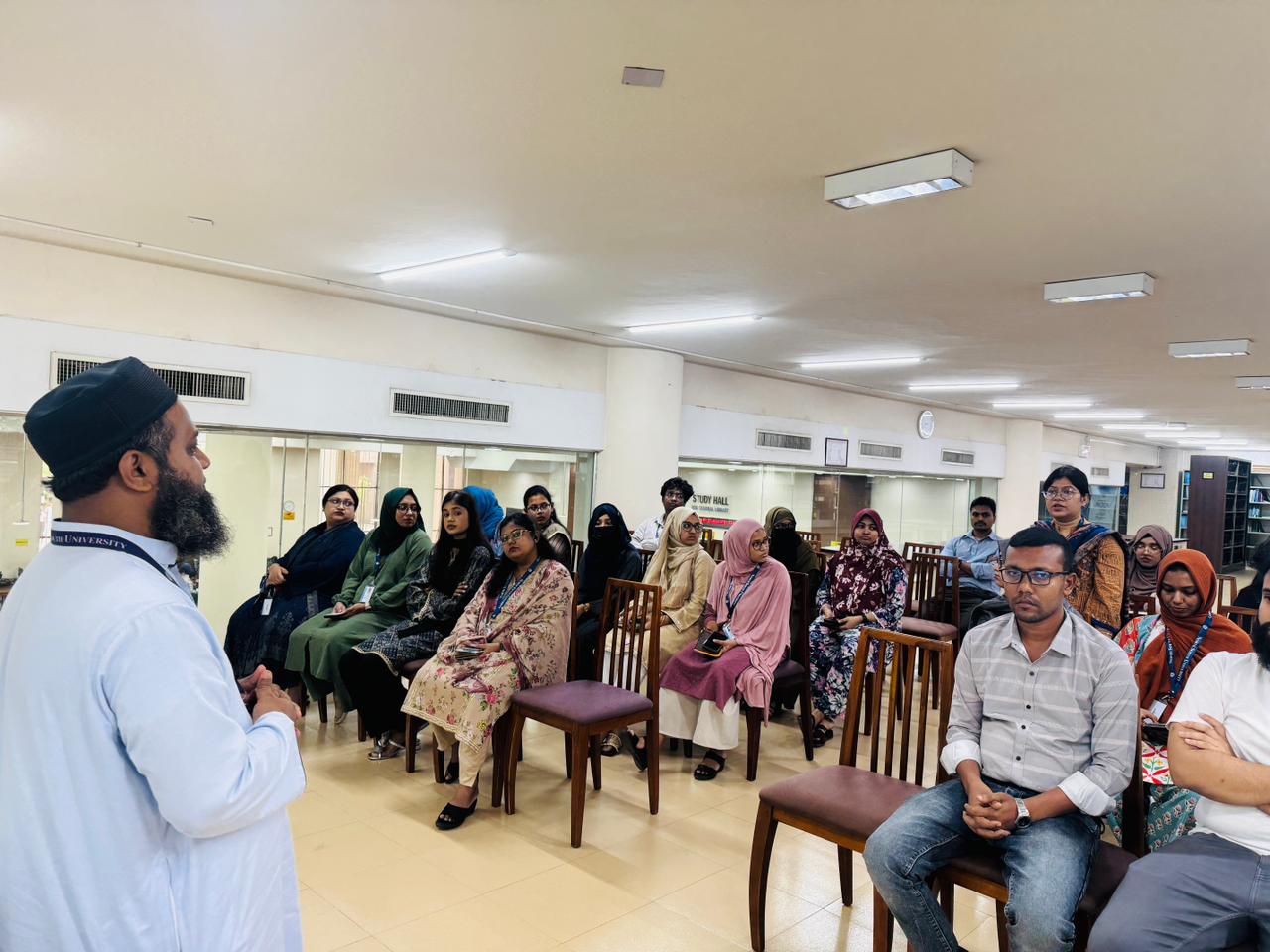
NSU Library Conducts Orientation Program for Graduate Freshers – Summer 2026
The North South University (NSU) Library successfully organized the Orientation Program for Graduate Freshers – Summer 2026 on Friday, June 12, 2026, at the NSU Library. The program was designed to introduce newly admitted graduate students to the library’s facilities, services, resources, and research support tools that will assist them throughout their academic journey.
The session was conducted by Mr. Rajiv Mahmud, Assistant Director, and Mr. Md. Ashikuzzaman, Library Officer. During the program, participants were introduced to the library’s rules, regulations, borrowing policies, membership services, and available facilities. The presenters also demonstrated how students can effectively utilize various academic and research support tools provided by the library.
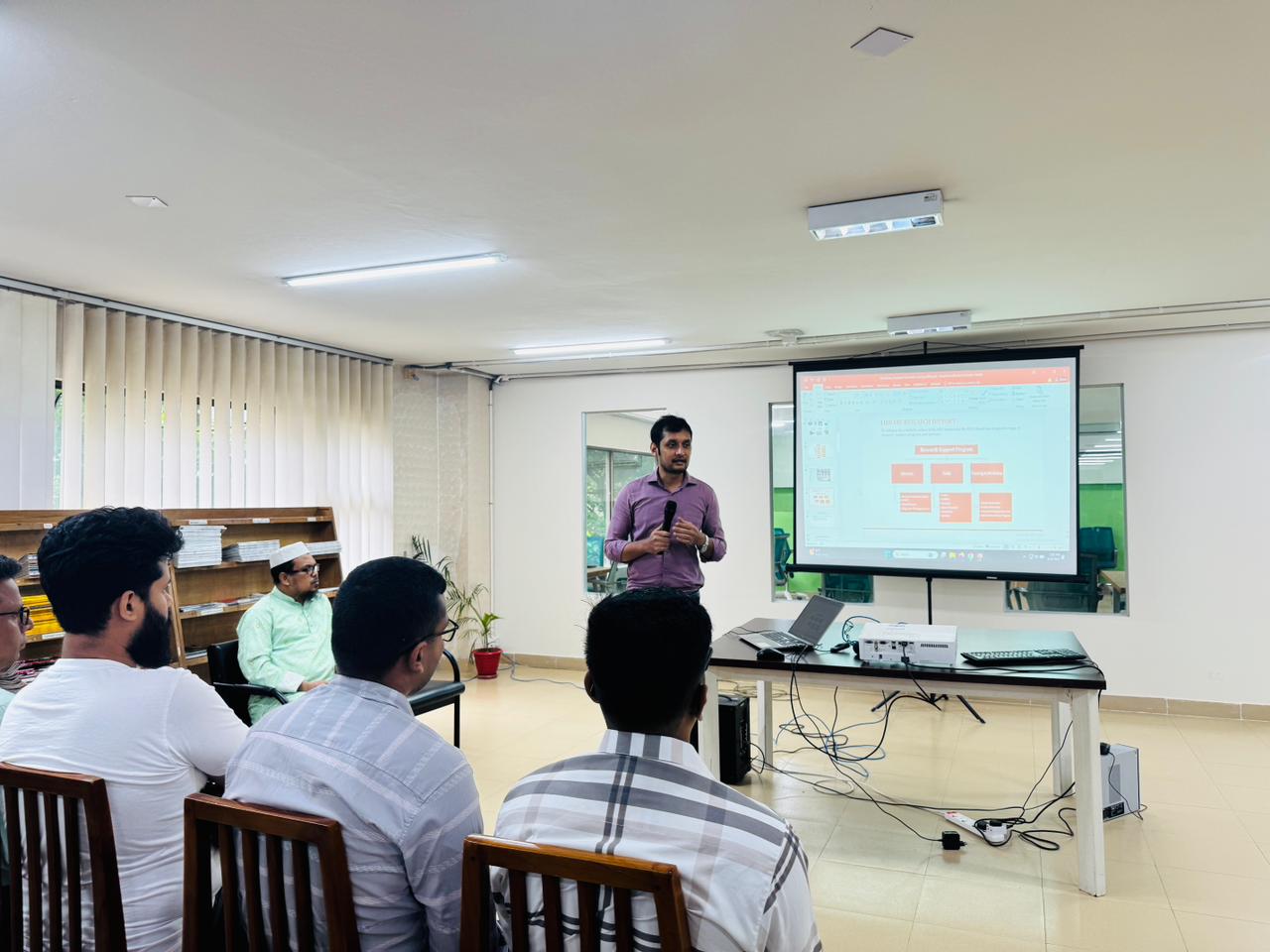
The orientation covered several important topics, including:
- Reference Management using Mendeley
- Research discovery and citation analysis through Scopus
- Academic writing and grammar enhancement using Grammarly Premium
- Plagiarism detection and academic integrity through Turnitin
- Access and use of the NSU Library’s subscribed online journals, databases, e-books, and digital resources
In addition, students were familiarized with the library’s research support services and were guided on how to access scholarly information resources both on and off campus.
As part of the practical demonstration, participants were shown how to use the library’s RFID Self-Check Kiosk for borrowing and returning books independently. The demonstration highlighted the library’s commitment to providing efficient, technology-enabled services and promoting self-service facilities for library users.
The orientation program provided graduate students with valuable knowledge and hands-on experience in utilizing library resources and research tools effectively. NSU Library remains committed to supporting the teaching, learning, and research needs of the university community through continuous user education and information literacy initiatives.